Category Archives: Uncategorized

ONE INCOMPARABLE CHRISTMAS

There was this dog we loved and lost on Christmas morning, 1951.
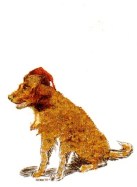
The Clancy Christmas

It changed everything.

We lived in a clapboard farmhouse then, built a hundred years earlier and insulated with Civil War era newspapers layered between the rafters and floorboards. It was a rickety-rackety place that sweltered in the summer and shivered in the winter when no amount of coal heaved into the basement furnace could sufficiently heat the cast iron radiators, or warm the boiler of bath water. The windows rasped with the wind, the floors creaked with the rain and the back door flew open unexpectedly.

“It’s just a spirit visiting,” mom would say, having given up on getting my father to replace the antiquated latch.

We were born in that house; three brothers, two sisters and I. Our childhood was spent clamoring up and down its winding stairs, playing board games on its covered porch, wishing on the first seen stars in the night sky from its roof, and never suspecting life would be any different than it was each day we were living it.

Advertised as a White Elephant for three thousand dollars with nothing down, my folks bought the house because it was the only place they could afford. Ours was a life of necessities: three meals a day, twice removed hand-me-downs, a block ice icebox, a single extension phone, broomstick horses, pillowcase capes, corrugated carton sleds and summer vacations camping in a W.W.II army surplus tent at state parks where mom boiled coffee and cooked meals over an open flame while we faux-fished with safety pins tied to kite string, scouted butterflies and floated on boats made from inner tubes wrapped in clotheslines to resemble canoes.

They were wondrous years made better by the presence of a ninth member of our family adopted on the morning of my birth. Her name was Clancy. She was our family dog.

“It’s written,” said my mother, “that the original Irish setter wasn’t the pure mahogany color we see now, but a burnished red with a snow white bib and matching diamond set in the center of its head.” Clancy was born with both and – even though we boasted about the markings of her ancient pedigree – we secretly believed she possessed the heart of an angel.

Clancy was our comrade and confidante. She accompanied us on errands and watched over us when chores needed doing. She got us to school on time and waited there to greet us at the end of each day. When we ate she sat near the table. When we bathed she stood near the tub.

When we read she rested her head at our feet. When we played she kept watch over our safety. Games were intensified by her barking approval, birthdays were celebrated with her howling accompaniment, sorrows were soothed by the gentle touch of her cold nose on salt-streaked cheeks and many a bitter winter night was made warm by her body filling the cold void at the bottom of one of our beds.

But my best memory of Clancy is of the Christmas morning in 1951 when we awoke to find her gone.

• • •

A fortnight before my father made his instructions clear. “Each of you is to make a list of everything you want for Christmas.”

“Everything?” I asked, eyes wide with surprise.

“What did I just say?”

I winced. My father was a disciplinarian who expected to be obeyed without question. That wasn’t hard, since he worked eighty miles away and often forgot to check for compliance whenever he came home on alternate weekends.

“Everything,” he reiterated, “no matter how ridiculous. Is that clear?” He stood glaring at our frozen forms before taking a Chesterfield from it’s crumple-pack, lighting it, removing a stray tobacco bit from the tip of his tongue and continuing on. “In one week you’ll each give me your list in an envelope with your name on it and I’ll mail them. Dismissed.”

My mom was as affectionate as my father was aloof. It was she who encouraged us to always make amends after arguments and share our few possessions.

“You six are the only people on earth you’ll ever know your entire lifetime,” she’d remind us. “Cherish that.”

What began with cooperative glee quickly turned into the drudgery of pencil shavings, eraser residue, wadded-up paper and the sweet smell of spent crayons. Each night before bedtime we’d meet to exchange ideas, promising no duplicates would be recorded and agreeing that the first person to list an item would own it and regulate borrowing times.

“It’s the perfect plan for maximizing returns,” the eldest of us assured.

“Who’s Max?” I asked.

“Just do as you’re told!” he demanded, knowing I rarely did.

During our final review of lists I noticed my brother Kit had added a P.S. to his. “Dear Santa Claus,” he wrote, “I’m tired of sharing Clancy. Please bring me a puppy.”

Certain I was the only sibling who felt the same, I promptly drew a puppy on my list.

The next morning our signed letters in sealed envelopes were handed over. As we stood at attention accepting praise from my father for this mission accomplished, none of us knew that each of us copied the request for a puppy originated by Kit.

• • •

Every Christmas Eve Clancy accompanied us on our journey to find the sweet smelling blue spruce my father had tagged in a tree camp, chop it down with a Boy Scout axe, tie it to the roof of our maroon Ford station wagon and cart it home for trimming to the sound of carols playing on the Victrola and the comfort of Big Top peanut butter on toast dunked in mugs of Ovaltine. The trips were always cold and cramped and ripe for disagreement, but especially so that year when the predicted ‘light flurries’ became a heavier downfall. Even Clancy was agitated. She wailed with the whipping wind all the way home.

Tree trimming included hanging aluminum-hinged Shiny Brite glass ornaments, thumb thick multicolored Royalites, peppermint canes, silver tinsel and a garland of popcorn and cranberries draped under a white plastic angel with spun glass hair and a die-cut skirt of stars that glowed from a small yellow bulb tucked inside.

That angel was near and dear to my mom. Each year she watched my father teeter on a chair to place it on the treetop, signaling our time for bed. On the way upstairs we’d stop at our red brick cardboard fireplace to thumbtack our stockings to its flimsy black mantle where mom had balanced a glass of milk, molasses cookies and carrots for Santa and his reindeer.

Even though Clancy scratched at each of our bedroom doors, no love would jump onto our beds to guard our hearts that fateful night. We all ignored her pleas by forgetting her faithfulness, preferring the promise of a puppy.

• • •

A blizzard engulfed the house while we slept. The weight of its drifts barricaded the downstairs windows and forced open the back door.

Most mornings, the first boy up would check the fire in the furnace and shovel in more coal as needed. By the time he finished, the gas stove would be warming the kitchen and momma would have oatmeal ready to quell our chant, “Food for the inner-man!”

But that Christmas morning was different.

We six awoke and sprang from our beds as one, fueled by anticipation and oblivious to the unusual cold as we felt our way down the darkened stairs, huddling close until Kit flipped the switch turning on the overhead globe and illuminating a living room piled high with gifts.

There were bikes and baseball mitts, sleds and skates, trumpets and teddy bears, dolls and drums, trains and planes, chemistry sets and butterfly nets, kites and cowboy hats, battery operated cars and trucks, books and balls, and clothes and caps arranged around our very first television set!

It was as if all my wishes on first seen stars had been granted in one felt swoop and – by possession of them – I’d never again enjoy the luxury of wishful thinking.

My siblings sensed it, too. Somehow we knew we’d committed the crime of excess; having everything we’d ever imagined as glorious within our reach. And yet – instead of joy – we felt a collective emptiness.

“Where’s Clancy?” I wondered aloud, not noticing the absence of puppies. Twelve eyes darted in six directions.

“Here Clancy, here girl,” Kit called out, whistling for her to come. We joined him in calling her. “Come, Clancy. Come!”

“She’s gone,” my father declared, already dressed to leave the house through a second floor window, hoping to spot a sign of her from the porch rooftop. “She got out the kitchen door last night and was caught in the blizzard. She couldn’t get back.”

“It’s my fault,” I blurted, my lips curled and quivering with regret. “I asked Santa for a puppy. That’s why Clancy ran away. Oh momma,” I blubbered, burying my face in her lap, “I didn’t mean to do it.”

Kit immediately confessed to asking for a puppy, too. And then, one by one, the others exposed what proved to be our family folly.

Momma comforted us as best she could while watching the day die in our eyes. It was more hurt than she could bear.

“Kit,” she urged, “check the bin to see if we have enough coal to last. It could be days before we get dug out of here and no telling of what’s going on with the neighbors until your father returns. Take your sister along. Let her help you.”

The steps to the cellar were thick-pitted pine, worn smooth on the edges from a century of use. I slid butt-to-step down them into the pitch black, whimpering, until seized by the sound of a soft, steady thumping.

“Is that the monster you said lives down here?” I whispered to Kit as he fumbled for the lights.

“I was just teasing about that,” he hushed back.

He grabbed my hand as the lone light from a hanging, 40 watt bulb flickered on, shedding a soft glow directly below it. And there, in its corrugated remains of the television box was our tail-wagging best friend, Clancy, proudly nursing her six newborn puppies.

• • •

By the time the puppies were weaned, we’d assured my folks we were happy to share our one red setter. But it wasn’t until the last of the litter was adopted that we realized we’d been promised and given everything we’d wanted for Christmas – yet none of us could recall what we’d gotten, except for those puppies that we gave away.

Nine years later Clancy died. We buried her in the back yard, her grave shaded by a pear tree my father planted when she, the tree, and I were all the same size.

Thirty years would pass before the pang of joy replaced the pain of loss and I adopted another Irish setter. She looked a lot like Clancy. She had the same white diamond on her head and white vest on her chest. She was as loyal and as loving and as totally trusting of me as Clancy was. I adored her in every way.

But somehow, come December there’d be those bittersweet moments when she’d remind me of a Christmas tree with only old ornaments and popcorn streamers, a cardboard fireplace with Orlon socks dangling, a hard plastic angel, six little kids and the joy of a solitary present to pine over.The Clancy Christmas
The holidays are – and will always be – a beautiful time of year.

A time I remember that giving is its own reward, sharing is the truest joy, and love is the greatest gift.

A time and a spirit likened to, but never quite the same as it was – as we were – that one incomparable Christmas.

# # #

This freshly edited essay was first published in 1976 in The Antiquarian Magazine. Copyright by Marguerite Quantaine © 1976 & 2013.

Do you have a favorite holiday memory?

Please share your thoughts, here, by selecting REPLY.

I’m all eyes and heart.

L A D Y • L U C K

OSCAR

I’m not a superstitious person by nature. I don’t think of black cats or the number 13 as unlucky. I don’t knock on wood to ensure things go well. When my right eye twitches, I don’t believe there’ll be a birth in the family. And if a candle suddenly blows out, I’m certain it doesn’t signal spirits will come calling.

Except (maybe) sometimes. Because something so bizarre befell us one long ago Halloween night, people have been brushing the residue of salt off my left shoulder ever since.

It happened up north, in a time when the holiday was still animated by moms making scrap cloth costumes for their kids, then letting them run, unassisted, through neighborhoods where every house had someone eager to marvel over foil-winged angels, feathered fairies, eye-patch pirates, sheeted ghosts, and comic heroes in tinted tights wearing scarlet skivvies and donning pillowcase capes.

Liz and I had just such a home that omened October, numbered 13 Cheshire Street, set back on a cul-de-sac, with its vintage wraparound casements porch facing north, and attached deck laundry facing south.

Why we’d decorated both rooms that year remains baffling, but we did, with every accordion-style paper ghost and goblin we could find at the five-and-dime. We tied dried cornstalks around the doors, and scattered straw over the floors. The sidewalks were lined with jack-o-lanterns lit by three inch sabbath candles. A witches silhouette swayed on the front door with tiny plastic bats dangling from her broomstick. A black cat cutout hung on the back door, over a “Scat!” sign scribbled especially for the occasion.

Inside, candied and caramelized apples, pink popcorn balls, teal blue bubble gum cigars, white powdered donuts, and warmed cider in fold-out handle paper cups were arranged on a long linen clothed table, free for the glee of anticipated trick-or-treaters.

Who never came.

Nary a one.

Instead, a moonless, tempestuous, indigo sky of four winds spewing sleet descended, making mayhem before depositing a gravestone cold in its wake.

Wiser women would have felt a sense of foreboding.

We just went to bed.

“Wake me when it’s over,” Liz said, dispirited. “And not a second sooner.”

Around midnight, I heard howling; intermittent at first, but gradually growing into a wail, like death scratching at the door. I slipped out of bed and felt a shudder when opening the window to spot a solitary candle still flickering within a collapsed blackfrosted pumpkin. Soon, that lone light in the night died.

“Power’s just out,” I whispered to myself while creeping blindly down the stairs and through the house to the kitchen where I felt around to find a flashlight; still fearful of the steady, doleful crying.

Nevertheless, I unlocked the kitchen door leading into the laundry room, then mustered the courage to cautiously crack open its backyard door, illuminating the deck steps.

There sat a black cat, yowling through frosted whiskers.

“You’re quite the screamer,” I hushed, ushering him in.

After wrapping the cat in a towel grabbed from the hamper, I fashioned a bed from some leftover straw, placing it, and him inside the dryer before cracking the door and returning to bed.

At half past four the caterwauling began again. This time, a flashing clock dial signaled the power was restored. Exhausted, I staggered up and stumbled down to the yard door, only to find Liz had put the screamer back outside.

“How could anyone be so callous?” I asked the cat while scooping him up and carrying him — this time to the basement, where I hid him in a corrugated box filled with my best cotton rags. During my sleepwalk back to bed, I fashioned the tongue lashing I planned to give Liz for her indefensible bad behavior.

The scolding wasn’t to be.

Well-rested and up early, Liz was already at the sink making coffee when I hurried past her heading down the basement stairs, shocked to find the screamer, smug as a bug in a hug while nursing six newborn kittens.

“Egad, I’m in for it now!” I surmised, way-way too loud.

“In for what?” Liz called back.

I didn’t answer. I couldn’t. Instead, I sheepishly carted the box of kittens up to the kitchen with momma cat in tow.

…and more

THE ABOVE EXCERPT IS FROM:
Seriously, Mom, you didn’t know?
by Marguerite Quantaine © Copyright 2019

Paperback & Kindle
Available on Amazon and in bookstores nationwide.

THIS LINK OPENS TO A FREE 3+ CHAPTER PREVIEW
 (If it skips ahead, just tap the left arrow.)


#   #   #   #

This freshly edited, updated essay was first published in 2011 in Kissed By Venus Magazine. Copyright by Marguerite Quantaine © 2011 & 2013.

Do you have a favorite Halloween memory?

Please share your thoughts, here, by selecting REPLY.

I’m all eyes and heart.

DRESS REHEARSAL : TAKE ONE

Mom & Me Kiss
A week after my father died in 1969, my mom bought her burial dress, a long-sleeved bevy of beige chiffon accordion pleats with contoured organdy hemlines and cuffs resembling parched petunias.

The collar was fashioned into a multilayered sash, cresting the shoulders and flowing down the back to veil the neck and screen the zipper. A peach taffeta sheath shimmered underneath.

“Everyone knows a wife dies seven years after her husband,” Mom declared.

“Is that the law?” I asked.

“It is,” she assured.

“And, if you don’t die, what then? Do they give you a ticket?”

Mom flashed me the look of admonishment that every parent keeps ready to actuate in times of insolence.

“It’s a glorious dress,” she said.

“Yes,” I conceded. “A veritable work of art.”

My mom was never as thin as she thought she was, or planned to be. After 56 years, six children and a passion for chocolate, she arrived at widowhood 20 pounds heavier than ideal for her 5-foot frame.

Still, she was striking. Her ivory-streaked ebony curls were invariably fastened atop her head like crown jewels. Her posture was precise. Her apparel was meticulous, with a penchant for pastels, fabric flowers and contemporary styles.

The exception being, that dress. Where other designs died on the rack and emerged in time as retro vogue, her burial dress remained permanently detained in 1969.

I don’t know why Mom never saw fit to keep the dress in a garment bag. Perhaps she just preferred the convenience of instant viewing. Regardless, she carted it, unprotected, through five dress sizes, three homes and 37 more years.

“She makes me put it on, you know,” my sister, Sue, disclosed one day.

“The burial dress?”

“Uh-huh.”

“Whatever for?” I wondered.

“So she can imagine how she’ll look in her coffin.”

I guffawed.

“She’s serious,” Sue cautioned. “Every visit, she makes me put that dress on and lie down. Eyes closed. Hands folded. Perfectly still. She makes Kate do it, too. Every holiday. But Kate lies with arms stretched wide, like wings.”

(Kate’s our kid sister. Both she and Sue are 5 feet 7ish.)

“Wings?”

“Yeah. When the sleeve pleats open, they look like angel wings.”

“Why hasn’t she asked me to try it on?” I almost pouted.

“Because you resemble a younger, thinner her,” Sue teased. “She characterizes you as her little dolly.” I scoffed at her remark, but took it as true.

“So? How do you look in it?”

“Puh-lease,” she chortled.

…and more
THE ABOVE EXCERPT IS FROM:

Seriously, Mom, you didn’t know?
 by Marguerite Quantaine

THIS LINK OPENS TO A FREE 3+ CHAPTER PREVIEW
(If it skips ahead, just tap the left arrow.)

#   #   #

This essay © by Marguerite Quantaine first appeared in St. Petersburg Times, on 11/5/2006.

——

Is there something special you do in memory of your mother or father? Please select REPLY and share it here. I’m all eyes and heart.

————-

IN DREAMS I WALK WITH YOU

Grandma Sutherland (1889-1961) I adored her.

Grandma Sutherland (1889-1961) I adored her.

Sometimes life is a sleepwalk in which we see everything clearly and deny it.

My walk began when I was 14, five weeks before the Fourth of July in 1961.

I had a recurring dream. It was dark and raining. I saw myself asleep on my grandma’s couch. Something stirred me. I got up and walked to the kitchen. There, lying curled up on the floor, was my grandma – my mom’s mom. I knelt down and reached for her hand. Only then would I realize my eyes were open and staring at the ceiling.

Every night, for five weeks, the same dream.

The morning after the first time, I told my sister, Sue. She said I was being dramatic. The second time I told my brother, Kit, who told my mother I was being weird. After that I went on dreaming — but never spoke of it again.

The weather forecasters warned of rain for the extended holiday weekend, but promised clear skies for fireworks.

I had a job selling 45s at the only record store in town. By closing time Saturday, I knew they’d been right about the rain. My brother forgot to pick me up, forcing me to walk the half-mile home in a dismal drizzle. I remember hoping my mom was working the vigil shift at a hospice home by then, unaware of my whereabouts. All I wanted was to crawl into bed and sleep through the holiday.

And I might have. But Mom and Kit were in the living room arguing over my grandmother when I sneaked in.

“I wouldn’t ask. But I must work,” she was saying. Frantic and sorrow straining her voice. “Go? Just for tonight?”

“Nothing doing,” said Kit. “I’ve got plans for early morning. Besides, David’s living with her. He’s the one who should be there, not me.”

“Your brother  won’t be there tonight and she’s not well,” Mom pleaded. “She needs you.” He ignored her. “Please?”

“I’ll go,” I said, disarming them. Without time for questions or concern, Mom gazed her gratitude and Kit drove me to where I’d never go again.

It wasn’t magnanimous of me. I idolized my grandma. Had circumstances demanded I live with her for good, I’d have gone as willingly. It’s not that I didn’t adore my mom. I did. But Mom loved six of us, equally. Grams loved me, especially.

My grandma was the scent of boiled coffee, fried doughnuts, and brown soap wrapped in the warmth of a summer day. A stern, determined woman who lived alone on an empty road, in a plain house, without television or telephone. Though her isolation required Mom’s visiting every day, she clung to her privacy and possessions as if they were gold. They weren’t – not even gold-tone.

By 11 the rain turned fierce, with roaring thunder swallowing the sky. I had to pound hard on her raised-paneled door before Grandma would let me in. She immediately demanded to know the whereabouts of my brothers.

“They couldn’t come,” I lied. “I came instead.”

“I don’t want you,” she said. “I want Kit. Where’s David? I want David.”

She sounded slurred, as if the storm had scrambled her senses.

“Well you got me, Grams,” I said. “So let’s get you to bed. I’ll sleep in the parlor on the couch.”

It took some fussing before she shuffled back to the bedroom. I sat with her in the dark a while, making certain she was settled before gently kissing her good night. Then I returned to the parlor and lay down damp, intent on sleeping fast.

When a silent streak of lightning crept by the window, I realized my eyes were open. There was no thunder. No rain. No noise. Only that bright white transient light marking the moment and where I was.

…and more
THE ABOVE EXCERPT IS FROM:
Seriously, Mom, you didn’t know?
by Marguerite Quantaine © Copyright 2019

THIS LINK OPENS TO A FREE 3+ CHAPTER PREVIEW
(If it skips ahead, just tap the left arrow.)

#    #    #

This freshly edited, updated essay was first published in 2003 in the St. Petersburg Times. Copyright by Marguerite Quantaine © 2003 & 2013.

————–

Do you have a memorable dream? Have any of your dreams come true?
Please share your thoughts, here, by selecting REPLY.

I’m all eyes and heart.

————–

DIVIDED WE (STILL) STAND

Ergo, E Q U A L I T Y

Ergo, E Q U A L I T Y

Gays are scary people.

Not the gay next door who provides for his parents and carpools his nieces to day care. Or the fellow who fixes my car. Or the lady who cuts my hair.

It’s only the media-hyped homosexual that makes me cringe and withdraw. Those clusters of erotic exhibitionists captured on camera for our viewing displeasure. Scurrilous straights cause me discomfort. But vulgar gays make me ashamed.

Harvey Fierstein has expressed impatience with people like me. He once called us “leeches” sitting silent on the sidelines while proud gays pave the way to equal rights for the majority of us “slackers.”

I like Harvey a lot. I admire and respect him for his courage and integrity. I think he’s a superb actor and writer and a fine role model. He gives gays spirit.

But I don’t think he understands that most gays don’t want to be enslaved by the duplicities of straight society. We don’t want to clone our ethics, or edit our emotions, or conform our lives to any corrupted concept of happily ever after.

If I could sit down with Harvey Fierstein, I’d tell him I’ve been hopelessly in love with the same woman for 43 years. But we won’t wed, not even though we work to support those who choose to. Not even if the Supreme Court makes marriage rights a reality.

Because, for most of my generation, love is our legacy. Not marriage. We aren’t joined by dowry, arrangement, prestige, or necessity. We aren’t bound by license, law, or nuptial contract. We don’t stay together for the sake of religion, parents, children, social stigma, economics, or expediency.

We’re connected only by love. Since time began, it’s has been the code of our culture. And, since love is holy, what we have is sacred.

So, I’d assure Harvey that – even though the alleged “gay agenda” seeks to stir us into the debauchery of that marriage melting pot – wedlock isn’t the priority of our majority.

It isn’t even our dream. Our culture is just more valuable, valiant, imaginative, romantic and hopeful than that.

I’d tell Harvey we dream of the day when gay men, who have the highest rate of disposable income in America, stop wasting their resources on purchasing the promise of eternal youth and utilize it to create safe havens in the heartland instead.

We imagine gay doctors, nurses, therapists and health care officials joining forces to build medical centers. Gay lawyers combining talents to establish legal firms. Gay singers and comedians backing gay-owned-and-operated restaurants and nightclubs. Gay athletes creating gay health complexes. Gay financiers building banks. Gay actors starting theaters. Gay educators forming charter schools. Gay religious leaders developing denominations that embrace gay people by interpreting ancient text in the spirit of divine law.

Our desire is to cultivate our culture, not to abolish it.

To elevate, not to assimilate.

To create, not to copy.

To lead, not to follow.

To record our history, not to erase it.

I’d question Harvey as to the purpose of new laws, when the constitutional law of equality has not yet been upheld for all Americans – guaranteeing life, liberty and the pursuit of happiness as inalienable.

I’d wonder aloud why we continue to chase after a society that doesn’t rise to the talent and tenderness of our own.

…and more
THE ABOVE EXCERPT IS FROM:

Seriously, Mom, you didn’t know?
by Marguerite Quantaine © Copyright 2019

THIS LINK OPENS TO A FREE 3+ CHAPTER PREVIEW
(If it skips ahead, just tap the left arrow.)

# # # #

This freshly edited, updated essay by Marguerite Quantaine first appeared in the St. Petersburg Times nine years ago. (Copyright by Quantaine © 2004 • 2013)

Please select REPLY to share your thoughts on love, marriage, and equality here.

I’m all eyes and heart.

IMMORTAL KISS


Eighty days after Bobby Kennedy kissed me he was killed. I don’t know why it happened — either the kiss, or the killing. Each time, he was caught up in the joy of the moment. Both times, he got whisked away.

As happenstance had it, Kennedy was frolicking with friends in the back seat of an inconspicuous car crawling down Fifth Avenue when he spotted me — a young, vibrant, redheaded Breck-replica in a Kelly green, worsted wool coat, weaving through revelers lining Fifth Avenue for the St. Patrick’s Day parade.

I was pugnacious. The flock in front of the 666 building was so sardined, it turned my two-minute sprint to the Primeburger into a twenty-minute tussle.

Hearing the crowds crescendo as a car of paraders slowed to a stop behind me, I poised myself to push through an advancing pocket of people.

Suddenly, someone grabbed my elbow and pivoted me into his arms, gently tilting my chin upwards before planting a quick kiss. His thicket of hair reflected like flax in the midday sun veiling two hazel, sleep stripped eyes conferring a dilatory blink – not unlike that of a tomcat purring thanks.

Then, just as instantaneously, he was hustled back to his locus in that long procession trekking towards his untoward future.

“You’re never going to guess what happened to me,” I nudged my friend, Marion, during the elevator ride up to our offices at Fuller & Smith & Ross the next morning. “Bobby Kennedy kissed me.”

“Ohmigod, you gotta be kidding!” Marion gasped. “What’d’ya do?”

“Do? What could I do? I was stunned. That’s all.”

“Did anyone see?”

“Well, yes. I guess. How could they not?”

“I mean, anyone here. Because it might not set well. Him being in the running now and all.”

That hadn’t occurred to me. “It was just a kiss,” I dismissed.

“Yeah,” Marion nodded. “But Bobby Kennedy for cripes sake. Who gets kissed by a Kennedy?”

“Who doesn’t?” I scoffed.

Fuller & Smith & Ross is an advertising agency footnoted in history. As Manager of Purchasing & In-House Printing I’d been privy to a confidential meeting detailing departmental procedures for handling the 21 million dollar account we’d secured two months earlier. My first assignment was to have business cards engraved for our new client. The inscription: Richard Nixon, 577 Chestnut Ridge Road, Wood Cliff Lake, New Jersey 07675.

Upon completion and delivery to his Park Avenue address, Nixon graciously sent me an autographed card. Seeing his inked signature on that ivory colored Bristol board proved pretty heady stuff to me — a small town transplant and political novitiate.

I was young, eager, and altruistic back then; a cookie cutter copy of that last generation of Americans who hadn’t a true clue as to what went on inside our nation’s governing bodies or outside our autonomous lives.

So, while I excelled at my job of vetting vendors, overseeing offset runs, getting offices decorated, equipment updated, carpets cleaned, prototypes printed, supplies stocked, and locks on doors changed whenever a colleague left — it wasn’t until I was entrusted with the billing of telephone lines linked to a network of chameleon operatives that I started to sink with the sinking-in.

“Cause and effect, people,” was the daily drill. “Never has so much money been amassed to elect a candidate. Our targeted buyouts of principal advertising airtime will efficaciously shut the Democrats out. Cause and effect.”

Try to remember, or imagine: In 1968, PBS was still in the proposal stage, there were just three major networks, prime time was essentially over by 10 p.m., a 30 second spot in the top rated markets cost about ten grand, and a million dollars was an unimaginable sum to most. But 21 million? That was whew!

By day, Nixon commandeered Town Hall meetings answering random questions in primary states while being filmed at three angles — front, back, and side. By night, our media technicians removed audio from side and back-shot tapes, replacing it with Nixon voiceovers of perfected responses. These were the videos offered to the media for viewing and airing. This was the foundation for creating many of the 15, 30, 45 and 60-second spots and news feeds.

Apparently, audience participants were so elated at seeing themselves on television that they failed to notice Nixon’s edited answers. At least, I heard no rumors of suspicion outside the office. I saw no evidence of complaint.

But within our ranks, long hours involving similar scenarios (and the disillusionment such capers caused) was taking its toll.

Perhaps that’s why Kennedy’s assassination registered as an amplified aghast to us. Because, by the time he announced his candidacy, we’d already been entrenched in a predetermined campaign victory for 10 weeks, believing everyone working on the inside of both political parties concurred from the get-go. Our jobs seemed only a matter of proper execution.

Sure, Bobby Kennedy added glamour and excitement to the illusion being painted for an impressionable public. Sensational headlines and endless editorials promised he could change things. And would.

But factuality was, by the time Kennedy won the California primary, every projection we’d been made privy to in January had confirmed itself by June. Ad copy, speeches, rebuttals, and press releases were written and delivered verbatim, leading a nation of primary voters to the polls and persuading them to push the Republican button. We knew if the Democrats had been wealthier in ’68, only the names would have changed to protect the process.


…and more
THE ABOVE EXCERPT IS FROM:
Seriously, Mom, you didn’t know?
by Marguerite Quantaine © Copyright 2019

THIS LINK OPENS TO A FREE 3+ CHAPTER PREVIEW
(If it skips ahead, just tap the left arrow.)

# # #

Did you have a brush with history that remains vivid in your memory? What are your feelings about the assassination of Robert Kennedy?

Please share your thoughts, here, by selecting REPLY. I’m all eyes and heart.

(This freshly edited, updated essay was first published in The Antiquarian Magazine © 1985, More © 1995, and in Venus Magazine © 2011 by Marguerite Quantaine © 1985, 1995, 2011 & 2013.)
.
.
Marguerite Quantaine is an essayist and author.
Read her on WordPress. Find her on Amazon. Friend her on Facebook.

THE TELLTALE HEART

Publicly, Thomas Jefferson believed in the principles of freedom. But privately, he grappled over whether the worst white man was still better than the best black man.

Ultimately, Jefferson’s failure to champion equality left his own illegitimate child enslaved, opening the wound which has since defined – not the competency of his mind – but the capacity of his heart.

We are once again at a crossroads governing the use of fine print to qualify equality.

But this time, the Jeffersonian paradox challenges whether we, as a nation, believe the worst heterosexual is still better than the best homosexual.

Because all the worst heterosexuals can marry anywhere in America. But even the best homosexuals cannot.

As the high court strips away all righteous rhetoric and political posturing, it’s possible they’ll recognize a raw reality, i.e., even when heterosexuals commit the most heinous crimes (murder, rape, child molestation, spousal abuse, terrorism, treason, and crimes against humanity), their known deviant behaviors are ignored by American marriage laws.

However, even when homosexuals are model citizens, their single, aberrant activity is prepossessed.

The court must then question whether this speaks to the heart of who we truly are, regardless of what we profess ourselves to be.

On the one hand, we insist the purpose of marriage is a belief in the sanctity of family.

On the other, we ignore the fact that millions of felons sitting in high security prisons are predominately heterosexuals possessing marginal moral character at best.

Yet each has a right to marry.

In some sit the suspects and convicts held for complicity in the 9/11 and Boston marathon attacks. And even they have the legal right to marry in every state.

But Lily Tomlin doesn’t.

Charles Manson, Sirhan Sirhan, David Berkowitz, the Menendez brothers, Theodore Kaczynski, James Eagan Holmes and Dzhokhar Tsarnaev can.

But Ellen DeGeneres can’t.

The former, loathsome, dictator Saddam Hussein, terrorist leader Osama Bin Ladin, and even Chancellor Adolf Hitler could have.

But Kate Smith, an American icon of our anthem, God Bless America, could not.

If the court entertains the position that “sin” is the foundation on which law is defined, will it validate the proponent “hate the sin, not the sinner” premise?

Can it then ignore evidence that it isn’t “sin” being shunned, profiled, attacked, ridiculed, denied equal rights and murdered?

Only American citizens are.

Will the court ask why there are no marches planned, political wars being waged, or state constitutional amendments being drafted against the seven deadly sins? Will it demand to know why it’s only a singular, Bible referenced, declared abomination being targeted? And, if it’s determined the sin/sinner assertion is an inflamed edict, could it set precedence for other inflamed edicts as just-cause to alter constitutional law?

Should the court recognize the Ten Commandments governing the worship of other Gods, building graven images, working on the Sabbath, blasphemy, dishonoring parents, murder, adultery, stealing, coveting, and bearing false witness as written-in-stone, will it be compelled to admit that being gay is not?

…and more
THE ABOVE EXCERPT IS FROM:

Seriously, Mom, you didn’t know?
by Marguerite Quantaine © Copyright 2019

THIS LINK OPENS TO A FREE 3+ CHAPTER PREVIEW
(If it skips ahead, just tap the left arrow.)


#    #    #

This freshly edited, updated essay was first published in 2004 to benefit L.I. Pride. Copyright by Marguerite Quantaine © 2004 & 2013.

What’s your stand the issue of equality? How will the Supreme Court decision on DOMA affect you, personally?

Please share your thoughts, here, by selecting REPLY.

I’m all eyes and heart.

–  –  –  –

PAST, IMPERFECT, INTENSE

Me@7

My father taught me things. They weren’t always the right things, or the best things, but he taught me all things, well.

One winterkill night while driving home alone together, he taught me his truth about lying. I was 7, then.

My mom was working as a confidante and caregiver at a private cottage for forlorn cancer patients. Her curtailed quietus watch of 11 to 7 promised us six kids we wouldn’t awaken without her.

“I’ll always be here to tuck you in and be back before breakfast,” she assured. It was enough for them, but not for me.

“I’m riding along,” I reckoned.

“Maybe in the morning, if you’re up.”

“Then, too,” I determined, set as cement.

She gently pressed the nub of my nose, lighting me up in her eyes. “You’re my little lion,” she said. “You give me courage.”

My parents weren’t friends then, if ever. Lovers once, no doubt. He as dashing as she was beauteous. Each with ebony locks. His, glossed waves. Hers, coiled curls. His jaw, chiseled. Her cheeks, rubicund. His eyes, bruin black, set tangent to an arrowed nose. Hers, bairn blue, gracing a Gaelic bob. Both seeped sheen and sensuality. The two as one? An envied ornament hung among plebeians.

But that was all ephemeral, lost long before the happenstance of me.

Oh sure, photos find him masterful in monochrome. Meritorious. Certainly indubitable. And it can be quibbled he didn’t become deriding and distant until after he began colorizing her with kids.

Regardless, I never espied demonstrative signs of affection between them. Neither gentility, nor joy. She endured his disrespect as wifeliness, while zesting motherhood. He husbanded acrimoniously, fatherly only to his firstborn.

And so it was, of all the trips we made together with mom in tow or mind, I remember that worst one best.

“DammitallMaggie,” he one-worded her. “It’s nearly 11. Move it!”

“Don’t get your dander up,” she growled back while winking my way. The dishes, nearly done. The laundry, almost folded. The house in chaos but cleaned down the middle and after-a-fashion. My siblings accounted for, kissed and sleeping. “I’m ready when you are.”

It was the most they’d spoken to one another all day, remaining silent in their seats until he skidded to the stop where we left her – just in time.

I remember watching her maneuver the hard packed snow and patches of ice while edging her way up the embankment toward that halfway house of enduring desperation. And how my father peeled off, leaving her without help, headlights, or sentiment for her safety.

During the drive home I kept my face glued toward the passenger window, contented to imagine mom in the morning, and it being my nose pressed against the frosted pane, greeting her return to us.

My father spoke to the back of my head when he said, “People lie to you because they don’t respect you enough to tell the truth.”

I remained removed; brown eyes searching boundless skies.

“They’ll cloak their words in omission, feigning innocence, thinking you’re too stupid to recognize the lie.” He paused, letting it etch.

I counted stars.

“That’s what they’re saying though. That they think you’re stupid.”

I yearned for Jupiter and Mars.

“The more deliberate and petty the lie, the less value they make of you.”

I found Venus.

“You know you’re utterly worthless when someone lies to you for sport.” He reiterated and enunciated, “Utterly.”

…and more
THE ABOVE EXCERPT IS FROM:

Seriously, Mom, you didn’t know?
by Marguerite Quantaine © Copyright 2019

THIS LINK OPENS TO A FREE 3+ CHAPTER PREVIEW
(If it skips ahead, just tap the left arrow.)


# # #

This freshly edited, updated essay by Marguerite Quantaine first appeared in the St. Petersburg Times five years ago. (Copyright by Quantaine © 2008 • 2013)

IMPERFECT CHILDHOOD? Lessons learned? Please select REPLY to share your thoughts.

I’m all eyes and heart.

A CAUSE FOR CELEBRATION

B1

The preliminary police report rendered me dead upon impact.

A drunk driving a Marathon cab fitted with an extended, reinforced steel bumper had broadsided us. He was clocking up to 70 in a 30-mph zone when he ran a red light and collided with the VW Bug I was easing into a parking spot as Liz sat next to me in the suicide seat.

The impact was ferocious. While peripheral vision allowed me a glimpse of my killer, there was no other warning. No screeching of brakes. No screaming of pedestrians. No sense of impending doom. Just a mild feeling of astonishment before whispering, “Oh my God, I’m dead.” That’s what I said.

Our car was ripped apart (lengthwise) from hood to trunk, welding the sheared pieces to the front end of the taxi. Twenty feet away, our flung wreckage had come to a halt at the entrance of a branch bank. I hung down twisted and broken through the remains, my face hovering just above the pavement, my auburn curls resembling a red rag mop.

Most gay couples are drawn and quartered by such tragedy. They’re impeded by laws awarding jurisdiction to distant family members. They’re intimidated by protocol and prodded by propriety. Their feelings and wishes are summarily dismissed as irrelevant. Barred from the ambulance. Excluded from intensive care. Denied decision-making.

“She’s my sister,” Liz lied emphatically. It instantly ended any question of her authority.

The first time she lied was to the officers who barricaded the wreckage, then tried to restrain her from reaching back for me. They’d dragged her clear, insisting I was beyond help.

How she broke loose, and what transpired is a wonder.

I must have responded to the energy of her touch. I must have been warmed to the blending of her tears in my stone-cold eyes. I must have sensed the silent incantations of her heart imploring mine to hold the course of ‘us’ as one, against all obstacles and odds.

“Hey, babe!” I breathed.

Her second lie was to the ambulance attendants. The third, to emergency room doctors. The fourth, to nurses. And then to technicians, aides, and investigators. She didn’t hesitate to claim me as her sister, knowing involuntary deceit had long been coerced from gays in lieu of being banished and public humiliation.

Lies were once our only conceivable lifeline.

Fortunately, I was a corporate executive for a large conglomerate. It gave me special insurance privileges that provided her with unlimited hospital access. She stayed in my room. She partook in every detail of my care and was privy to all my medical information. My doctors consulted her. My nurses kept her updated.

Nevertheless, when it came to certain courses of action, not everything suggested was automatically allowed.

It’s because (even now) most lesbians mistrust the medical profession. We cringe at the prospect of contact with male doctors. We shy to probes pertaining to our personal lives and intimate behavior. And, even though many older women entered conventional relationships in an effort to hide their true sexual identities, there are vast numbers of lesbians who have never engaged in intimacy with a man. Women who know being gay goes far beyond an aversion to heterosexual sex; that the differences in our genetic codes include a wiring that circuits a deep-seated aversion and basic incompatibility with all dominant aspects of the opposite gender.

It’s as if (equivalent to the distinction found between Asian and African elephants trumpeting in the night) science will someday discover that we, too, are a similar — but different — species.

So it came as no surprise to Liz when I refused to be catheterized, even though catheterization was necessary to save me. Regardless of the brutal total body trauma I suffered, this perfectly natural anomaly had triggered my sense of dignity, demanding decorum. Only the empathy and courage of a surgical nurse named Christine could clear the emergency room of male doctors and provide me with the symbiosis I needed to survive.

…and more
THE ABOVE EXCERPT IS FROM:
Seriously, Mom, you didn’t know?
by Marguerite Quantaine © Copyright 2019

THIS LINK OPENS TO A FREE 3+ CHAPTER PREVIEW
(If it skips ahead, just tap the left arrow.)


#   #   #   #

This freshly updated essay by Marguerite Quantaine first appeared in the third person in The St. Petersburg Times (2008) and Venus Magazine in the first person (2010).  Copyright by M. Quantaine © 2008 / 2010 / 2013.

Please share your thoughts here by selecting REPLY.

I’m all eyes and heart.

AS GOOD AS GAY GETS

One determined little 5 year old.

One determined little 5 year old.

By Marguerite Quantaine

Someday my novel will be optioned by a mainstream publisher, rate stellar reviews, be adapted to film oozing romance through eloquent innuendo, and receive the acclaim of people who’ll prattle over my sudden success.

But they’ll be instantaneously mistaken (about my success being sudden) because I’ve worked hard all of my (remembered) life.

I began my callings at age 5, collecting castoff bottles for return to wooden crates at the corner, single pump gas station with its big red cooler of cola immersed in ice water and a grease monkey teetering on a beat-up stool next to it paying me a penny a find.

At 7 (being small and scrawny for my age), my brother dressed me as a waif to knock on the doors of upper class condos, selling occupants Christmas cards they probably never sent, but gave me my dollar a box because I looked so pitifully poor, like a melancholic mutt on the street corner wagging its tail, twanging their untuned heartstrings.

At 8, I shoveled snow with a spade in the winter (that’s right, a spade), pushed mowers in the summer, and raked leaves in the fall, underpaid with nickels by anyone willing to exploit me.

At 10, I delivered newspapers on my brothers routes, rising before daybreak to cut the hairy nylon twine from big bundles left on neighborhood street corners, rolling and folding each paper to perfection, burnishing and stuffing them into a canvas bag dragged along behind me, pitching the papers towards porches, then hurrying home in time to don a dress and walk 3 miles to school (that’s right, 3 miles).

At 14, I claimed I was 15 to get a genuine job (4 to 9 weekdays, 9 to 9 on Saturday) selling records at a store that only hired boys for the 30 years before I sailed through the door.

“Why should I hire you?” asked the owner, a doddering, Dickens-like character whose bifocals were as thick as block glass and modish flattop belied his desire to appear younger. “Boys bring in girls who like records.”

“Boys flirt with girls that giggle and irk paying customers,” I countered. “Boys arrive late, leave early, take cigarette breaks, and call in sick from phone booths at football games.” I let that set a second before adding, “I have red hair. I’m cute enough to attract boys who’ll talk to me about girls. I’ll sell them records for those girls. Whenever they win one over — and they will (I winked) with my expert advice — they’ll be back to buy more.”

“Expert advice?”

“I have a two-sport-varsity older brother and one bombshell of a sister. I’ve heard all their gameplay. Try me. You’ll see.”

He did, teaching me purchasing, cataloging, product display, inventory control, advertising, and promotion. I was the first girl hired there, then the first girl hired as a research editor for a local trade magazine, then the first girl hired as a proof-runner for the daily newspaper before I finally fled my hometown for the big city beat.

I arrived in New York with $126.00 lining my red-rubber boots, no job prospects, no place to live, and no plans beyond attending The American Academy of Dramatic Arts where I’d earned an entry after winning the regional finals of a television talent search in which I’d been entered (unknowingly).

Being awed and alone in Manhattan was thrilling. I saw all directions as arrows angled upwards.

All I had going for me was attitude on my first day (faking-it) as a graphic artist.

All I had going for me was attitude on my first day (faking-it) as a graphic artist.

Insisting “Oh sure, I can do that” gained me the gig of being the first female hired as a graphic artist at the United Parcel Service (even though I’d never seen a t-square, held a razor knife, or knew how to crop a photograph). After several months of (intense) covert tutelage by the fellow at an adjacent art board, I snagged a (enviable) job at a Fifth Avenue ad agency where I was promoted to management (the first female Purchasing Agent) in 5 months time. Within 3 years I parlayed that into a corporate office fashion industry position where I excelled until being struck by a drunk-driven taxicab. The driver flew the coop and the cab company declared bankruptcy (as did the insurance company holding the cab’s policy), catapulting my career back to ground zero (accompanied by chronic disabilities).

and more
THE ABOVE EXCERPT IS FROM:

Seriously, Mom, you didn’t know?
by Marguerite Quantaine © Copyright 2019

THIS LINK OPENS TO A FREE 3+ CHAPTER PREVIEW
(If it skips ahead, just tap the left arrow.)

# # #

Is (gay) life good for you? Are you (still) dreaming (big)?
Select REPLY and tell me.

I’m all eyes (and heart).