Tag Archives: women

MY LIFE OF CRIME & PUNISHMENT

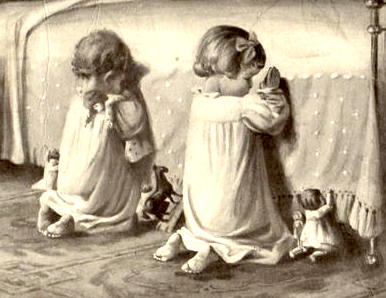
Little Tots Prayer

The first thing I ever did to indicate the direction I was heading resulted from letting my kid sister, Kate, annoy me. I was 3.3 at the time and tiny for my age; she was a martinet of 2 and already bigger and brighter than me.
We lived in a drafty 19th century farmhouse on the brick street of a south side neighborhood in a small midwestern town back then, where her crib sat in my parents bedroom, being used one night to corral us while company visited.
It was late. We were lying back-to-back. I was weary and wanting to sleep. She was incessantly demanding that I “Get out! Get out! Get out! Get out!” of her bed until I got fed up and gave her a reason to bellyache.
I peed on her.
That was my crime.
As punishment, every person Kate introduced me to from that night onward included the preamble, “This is my sister, Margie. When we were kids she peed on me,” invariably prompting the retelling of our toddler turf war.
The last time she introduced me was to her late shift hospice nurse in May of 2015. It’s allowed her to maintain the upper hand on my heart, forevermore.

~
When I was not quite five I crossed a busy street in the middle of the block after being warned never to do so.
That was my crime.
As punishment I was, first, hit by a taxicab, and then vilified by my kindergarten teacher, Miss Beech, for losing the school’s celebrated green-and-white stick figure safety flag awarded to the most accident-free district. I spent all of kindergarten, first, and much of second grade shunned.
The alienation ended when we moved from our neighborhood into the school district that was presented the prestigious safety flag after my mishap.

~

…and more


# # #

The balance of this essay can be found in

Seriously, Mom, you didn’t know?

CLICK ON & THE BOOK OPENS TO A FREE 3+ CHAPTER PREVIEW
If it skips ahead, just tap the left arrow.


Copyright Marguerite Quantaine © 2017
.

Please SHARE THIS on Facebook and Twitter,

and tell me how you feel by selecting REPLY.

I’m all eyes and heart.
.
.

Marguerite Quantaine is an essayist and author.
Her novel, Imogene’s Eloise : Inspired by a true-love story
is available on AMAZON, in paperback and Kindle. Please choose LOOK INSIDE
for a free read of several chapters before you consider buying.

ALL I WANT FOR CHRISTMAS

final-xmas-tags
MAY THE SPIRIT OF THE SEASON
Fill you with the awe of a child,
the serenity of feeling loved,
the courage of a feral cat,
the gratitude of a rescued dog,
the joy of a songbird,
& the hope of another day
to get it right,
do it better,
& say what’s in your heart
to all those you hold dear.
.
Happy Holly Days
My Sweet Peeps!

.
Marguerite & Elizabeth
#UpToSomethingSince1970
.
McQ©2014-2016

.

What is ALL YOU WANT for Christmas?
PLEASE  SELECT  REPLY
to share your wish-list here.

.
.

°
.

http://www.amazon.com/dp/0940548011/ref=cm_sw_r_fa_dp_kOpBub0DCT8E8

PANTS ON FIRE

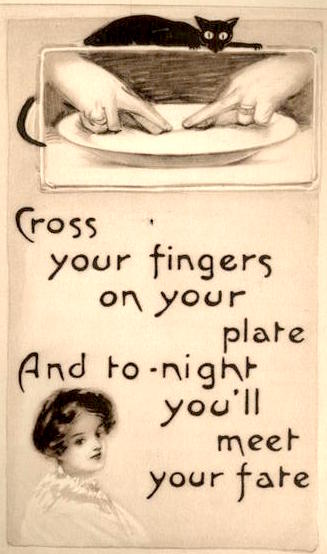
Fingers Crossed on Plate to Wish for Fate

I’ve been lying to my partner about something-or-other for 45 years. I consider it an essential ingredient in the recipe of happily ever after.
.
Oh sure, I know lying has been a ‘don’t’ on the Top 10 for nearly 58 centuries, and (no doubt) good books will be thumped in outrage at me for being an avowed fabricator.
.
No matter. I maintain that the best way to stay hopelessly devoted is to — subjectively and selectively — lie.
.
Case in point: Regardless of the fact that my much better half has enough clothes to restock the shelves of a small boutique, she doesn’t wear 95% of her wardrobe. Instead, she dons the same outfits, day in and out for an average of 2 years running, because each shirt, pair of slacks, sweater, sweatshirt, pajama top, tee, and jacket in a revolving variety rack of, sa-a-ay, 2 garments per category, is proclaimed to be her favorite.
.
This is where bleach becomes my buddy.
.
I accidentally splash bleach, or spill bleach, or mistake a spray bottle of Soft Scrub for Shout, or add Clorox instead of Downy to the rinse-cycle of any garment (including my own) that I cannot stand to look at for a tub-of-water longer.
.
In fact, hearing her scream from the laundry room “You idiot!” is like music to my ears and triumph to my eyes.
.
Saving her from potential harm (like when she insists it’s safe to clean the car mats lying on the ground in the pouring rain because she’s using a dry/wet vacuum) requires more creative lying.
.
…and more


THE ABOVE EXCERPT IS FROM:
Seriously, Mom, you didn’t know?
by Marguerite Quantaine © Copyright 2019

Paperback & Kindle
Available on Amazon and in bookstores nationwide.

CLICK ON & THIS BOOK OPENS TO A FREE 3+ CHAPTER PREVIEW
(If it skips ahead, just tap the left arrow.)

#    #    #
.
Marguerite Quantaine is an essayist and novelist.

DO NOT BUY THIS BOOK
without first reading 7 chapters for FREE on Amazon to determine the caliber of writing and quality of the story. Select “Look Inside” over the cover of the book. Thanks!

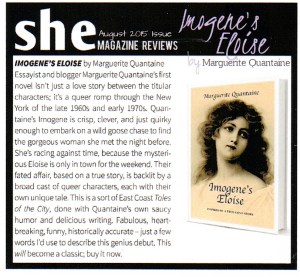
SheMagRev

IMOGENE’S ELOISE: Inspired by a true-love story
by Marguerite Quantaine
http://www.amazon.com/Imogenes-Eloise-Inspired-true-love-story/dp/0940548011/ref=sr_1_1?s=books&ie=UTF8&qid=1434585436&sr=1-1&keywords=Imogene%27s+Eloise

Every Woman Should Run For Public Office Once Or Twice

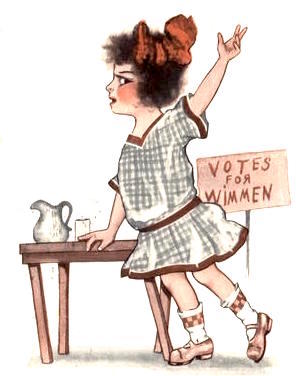
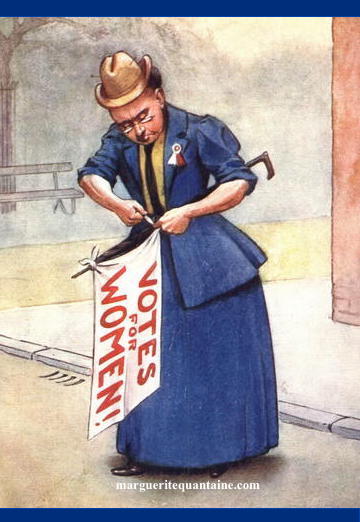
Votes for Women - Suffrage“There’s never been a colored, a Jew, a Democrat, a Yankee, a queer, or a woman as Mayor of this town and there never will be!”

I glanced up from my notes to study the odd little man in his Oshkosh overalls, Penny’s plaid shirt, knee-high Frye boots and Tom Mix hat.

His cohorts called him Red. I don’t know if he was christened that, or nicknamed for the color of his neck — but it certainly didn’t stem from embarrassment by him, or any of the men at that district Republican Committee meeting rewarding him with whistles and a rousing applause as I sat alone in the far, back corner of the small auditorium, recording the  forum as a favor to the (absent) president of our local Republican club.

And, all I could think was —  what luck!

No, not because I was a committee member and could object. I wasn’t.

But I was born in the small town that hosted the first Republican convention, “Here, under the oaks, July 6, 1854” where an obscure granite rock with a bruised bronze plague once sat on a tiny patch of treeless grass, three short blocks from where I spent my most misinformative years.

Back then, the rites of passage included adopting both the religion and political party affiliation of your parents. My parents were protestant and Republican. I’m neither, but during my juvenescence, I feigned being both.

The reality is, religion and politics have never been roadblocks for me. I tend to accept that we’re all going to believe what we need to believe in order to survive our slippery slope slide from here into hereafter.

However, the pretense of politics alarms me, and is the reason I encourage every woman to run for public office.

I have.

It’s easier than you think, and more satisfying than you dare imagine.

The Suffragette

After filling out the simple forms with the Americanized spelling of my last name and paying a nominal filing fee, I learned you aren’t required to raise money, put up signs, hand out cards, take out ads, stand on street corners in inclement weather inhaling exhaust while  waving to commuters — or even to serve if elected.

Which I did not do.

Instead, I entered the citywide race for Mayor because I could.

And, because the Mayor of our town is in charge of the police force that was alleged to have created computer software profiling every resident according to age, gender, race, religion, political affiliation, marital status and coded lifestyle.

I ran because the Mayor had the power to veto city council legislation.

I ran because the personal voting records of all residents, their addresses, and phone numbers are made available to campaign camps via their candidate.

I ran because it’s possible for local elected officials to access sensitive census information about their neighbors.

I ran because I’d be invited to all candidate gatherings, lunches, forums, debates, and media interviews with equal time to speak, followed by unlimited time to answer questions. Places where I could tell the people about the alleged profiling, the veto capability, the reality of records, and the potential for both discrimination and profiteering to the detriment of the electorate should the (professed private) census information be misused by unscrupulous officials with a personal agenda to advance.

But primarily, I ran because I was told:
“You cannot.”
“And yet, I can.”
“You can’t run as a Republican.”
“Unless I’m registered as a Republican. Then I can.”
“It’s a nonpartisan race, so no one will know.”
“Unless it’s leaked.”
“You won’t have the backing of the Republican Party.”

Aye, there’s the sub rosa.

… and more.

.

.

THE ABOVE EXCERPT IS FROM:
Seriously, Mom, you didn’t know?
by Marguerite Quantaine © Copyright 2019

Paperback & Kindle
Available on Amazon and in bookstores nationwide.

CLICK ON & THIS BOOK OPENS TO A FREE 3+ CHAPTER PREVIEW
(If it skips ahead, just tap the left arrow.)
https://read.amazon.com/kp/embed?preview=inline&linkCode=kpd&ref_=k4w_oembed_gWkz0DNgCijS4X&asin=B07R95DP4V&from=Bookcard&tag=kpembed-20&amazonDeviceType=A2CLFWBIMVSE9N&reshareId=AF1TWQN5JN7F3MJZWCJ9&reshareChannel=system&fbclid=IwAR2MMqeUqjrdwDfqDgOFayZnRg2yTTzYL9ScY_zQuS4bjb64-0eG6vYrRxw


#     #     #


Marguerite Quantaine is an essayist and author.
Her book, Imogene’s Eloise : Inspired by a true-love story
is available AMAZON, in paperback , and on Kindle.

“… crisp…clever…unique…saucy humor…delicious writing…fabulous…funny…historically accurate…genius debut… This will be a classic; buy it now.”
SHE Magazine Reviews IMOGENE’S ELOISE: Inspired by a true-love

SEE YA LATER ALLIGATOR

Won't You Be My HoneyThe first time I spotted the alligator in the murky waters of a man-made lake framing luxurious condos on one side and a city park on the other, I worried aloud for the safety of the mallards, Muscovy, and white, waddling ducks, the snapping turtles, giant goldfish, flock of pristine egrets, and wading blue heron, making their homes in the marshes there.

“And, the kids who play in this park,” my sweetheart added.

I didn’t respond. Not that I would ever want a person of any age to be harmed by an alligator, but there was no imminent danger in that. Only the nature-preying-nature lurked.

The lake is more for show and tell by realtors looking to justify pricey units with a view. There’s no swimming allowed, and since it’s illegal to feed wildlife in Florida outside of a reserve, observing nature in this park is mostly done from a deck built 15 feet above, and stretching 20 feet out over the water, where picnic tables are placed for brown baggers wondering what so many thieving sea gulls are doing there, some sixty miles inland.

At first, all I saw were the mammoth marble shaped alligator eyes, trolling the lake’s surface, leaving innocent ripples of water in his wake.

“Or,” she said when I pointed out the marauding eyeballs, “it’s a submarine.”

“No, hon, I’m pretty certain it’s an alligator.”

“But, I’m thinking —  if it is a submarine…”

“It’s a gator, okay?”

“I’m just saying what it could be,” she persists, as the tire tracks of its back emerges. “Or, maybe one in camouflage to look like an alligator, so no one would suspect.”

Really, who am I to say otherwise? I thought.

We only visit this particular park once a year, in September or October, depending on what date the High Holy Days fall.

I won’t expound on the significance of these 10 days for those of you who aren’t Jewish, but I will share the custom of casting bread upon the water (tashlikh) as a symbol of one’s transgressions being disposed of. Unlike other religions, Jews don’t believe in original sin. Instead, we’re born pure, acquiring our indiscretions with age, intent, or ignorance along the way.

But, if we’re sincere in saying “I’m sorry” to those we’ve wronged, and have done good without expectation in return, and made an earnest effort to mend fences, the sin slate gets wiped clean on Yom Kippur, giving each of us another chance to get life right, and do it better.

The disclaimer appears in the setting of the sun, symbolizing the closing of the Book of Life, when even nonbelievers (secretly) want their names, and those of their loved ones inscribed therein — although no one learns who makes the cut until the High Holy Days roll around again the following year. (Because only those remaining in the here and now know if they were inscribed back in the then and there.)

For the record, I’m very disorganized about organized religion, to the point of anti-it.

But I do like everything about Rosh Hashanah and Yom Kippur, the culmination of 10 days of introspection, taking stock of one’s life, offering amends, being grateful for whatever cards have been dealt, making promises and looking forward while witnessing the sun sink behind the trees, or beneath the ocean, or into the hills.

Of course, I’m pulling for more than family and friends. I want my pets to be included in that Book of Life, too, and mercy shown for all the animals on earth. I want children to be protected, and hurts healed. I want every woman to fall in love with the person who has fallen in love with her. My list is long. I ask a lot. It takes me the full 10 days to catalog all the hope in my heart.

…and more


.

THE ABOVE EXCERPT IS FROM:
Seriously, Mom, you didn’t know?
by Marguerite Quantaine © Copyright 2019

Paperback & Kindle
Available on Amazon and in bookstores nationwide.

CLICK ON & THIS BOOK OPENS TO A FREE 3+ CHAPTER PREVIEW
(If it skips ahead, just tap the left arrow.)

#     #     #


PLEASE  SHARE YOUR THOUGHTS ABOUT THIS ESSAY
BY SCROLLING DOWN & SELECTING: REPLY.
I’m all eyes and heart.

#    #    #

Marguerite Quantaine is an essayist and author.
Her book, Imogene’s Eloise : Inspired by a true-love story
is available on AMAZON, in paperback , and on Kindle.
.

“… crisp…clever…unique…saucy humor…delicious writing…fabulous…funny…historically accurate…genius debut… This will be a classic; buy it now. 

SHE Magazine Reviews IMOGENE’S ELOISE: Inspired by a true-love story.


I’M EATING CROW HERE

#7 ad

I remember when the first articles were published by researchists revealing that hot dogs were dangerously bad for us (I stopped eating them), as was peanut butter (I cut back), and eggs (I wasn’t dissuaded), and donuts (get outta town!).

Much like telling those who bet on the horses that races are rigged, or lottery hopefuls that the odds are stacked against them, or fans that an event is sold out, or kids younger that seven that there is no Santa Claus — learning the dire details involving comfort foods did more harm than good, because (regardless of fact accuracy and well-intended truths) it robbed the partakers of the enjoyment of doing what wasn’t necessarily wise, or profitable.

And that’s about all my 15 hour post, And The Winner Is … Not Me, accomplished. It exposed something that everyone probably knew, but no one wanted to admit, because the happy habit was universally shared, and the group addiction did no harm.

I was wrong.

I apologize.

I took the long way down a wary road best navigated by denial, when only the end result was required reading.  That, in essence, is this:

The finest award a writer can be given is the feeling of joy that comes from writing a worthy book. It’s incomparable. It can’t be taken away. It’s what makes you a winner.

And, should your book receive a good review, or is given as a gift, or mentioned to friends, or ordered by a library, or suggested to a book club, or introduced at meetings, or touted at functions, or buzzed about on buses, or pondered by strangers, or discussed by family members, or serves as dining repartee  — well, that’s the mustard on the hot dog, the jelly on the Jif,  the sun in the sunny side up, and the icing on the donut.

Gobble, gobble.

#     #     #

Copyright by Marguerite Quantaine 2015


Whether you agree or disagree, please
SHARE YOUR THOUGHTS BY SELECTING: REPLY.
I’m all eyes and heart.


http://www.amazon.com/dp/B00O6BOB2M/ref=rdr_kindle_ext_tmb

PLEASE DO NOT BUY THIS BOOK
without first taking advantage of the 7 chapter free read
to determine the caliber and worthiness of content.

After that, you’re on your own.

NOW THRU VALENTINE’S DAY : $1.99
At the KINDLE nearest you.
(Also available in paperback.)

wfyaInterviews: Marguerite Quantaine

Author of  Imogene's Eloise

Author of
Imogene’s Eloise

Q: Have you had a lot of rejection?
A: I have not. But then I haven’t submitted much of what I write to very many places. However, when I have submitted essays, I have had my writing rejected.

Q: For example?
A: A friend once told me that humor written by women is almost always tossed when submitted to The New Yorker for their Shouts and Murmurs column.

Q: You don’t aim low, do you?
A: Big dreamers never do. Anyhow, after hearing this I got on my high-horse one Saturday night and submitted a Shouts piece, thinking it would be at the top of the editors mailbox for consideration on Monday morning.

Q: And?
A: I got an instant — and when I say instant I mean within seconds — an instant rejection, followed by an email from the desk of Bob Mankoff offering me a subscription to The New Yorker at a discounted rate, the magazine’s shop to browse and books to buy.

Q: Ouch.
A: Actually, I burst out laughing and immediately thought about contacting Guinness to see if it set a world rejection record.

Q: Have you?
A: No. But the thought is still percolating. More important is, it put the magazine into perspective for me. It finally makes sense as to why The New Yorker is dying a slow death.

Q: Because?
A: Because writers are readers first and foremost, and when you alienate a writer — even a bad writer — you lose a reader.

Q: You stopped reading The New Yorker?
A: Except when someone gives me a copy, yes. But to be fair, I never understood most the articles or all the cartoons. Many a night, when suffering from insomnia, a story in The New Yorker has put me right to sleep.

Q: How about Imogene’s Eloise? Was that accepted right off?
A: No, it was rejected right off.

Q: Seriously?
A: Yes — and let me stress — thankfully.

Q: Can you elaborate?
A: I thought I knew one of the owners of a publishing house whom I regarded as a friend. I wasn’t really looking for a contract so much as a nod.

Q: Approval.
A: More like, I hoped to be told ‘it appears promising, but at 150,000 words it’s too long, resubmit it when you’ve edited it down by half’ — something of that nature.

Q: And you got, what?
A: After following the submission guidelines, I got a sloppily composed and executed email thanking me for my short story and saying they had no interest in it.

Q: You’re kidding.
A: I am not, but like the email from Bob Mankoff, I have greatly benefited by the rejection.

Q: Are you and the publisher still friends?
A: No, but not because of that.

Q: Because of…?
A: It’s not really relevant.

Q: It’s an interviewers prerogative.
A: Yes. Yes it is and I do so love the word, prerogative. Okay. A third party had told me she’d decided not to submit to my friend’s publishing house because she wanted to be represented by a suit.

Q: A suit?
A: Someone who always looked spit-shined and ironed and successful and worthy of her writing rather than disheveled and wrinkled and as crumpled as this publishing person had appeared in public. So, when the topic arose between us, I said I was privy to something that I thought would be beneficial for her to know, but made her promise not to tell, or ever identify me, should she choose to bring the issue up for discussion. When she agreed I related the impression her partner’s sloppiness made, and that I thought it valid for a writer to expect her publisher to always look professional.

Q: And she told?
A: Yes, but it wasn’t that she told. It was that, after she betrayed my confidence she lied to me about betraying me, repeatedly, until she finally admitted she lied, but in doing so, justified the betrayal and the lying, then compounded the lie by being deceitful about another author whom she decided had crossed her. I cut ties with her for that and it cost me the loss of at least 9 of her colleagues.

Q: Surely, that bothered you.
A: No it did not. I’m far better off because of it, and I believe it’s what people who allow themselves to be bullied don’t understand. Whatever you think you might lose in the short run, you gain in the long term, and the people you end up with are so much more valuable than those who turned away.

Q: Food for thought? Or, preachy?
A: My sisters would say preachy, and I’m certainly no stranger to bandwagons, but I’d prefer to think of myself as someone who sets an example by my actions speaking even louder than my words.

Q: That’s a perfect segway back to role models. What do you think of the way women are portrayed?
A: In?

Q: LesFic books and movies.
A: If you mean lump sum, all genres, that’s really too sweeping a question. Even then I’d be limited to the books I’ve read and the movies I’ve seen.

Q: Most movies are based on books, so let’s start with the movies.
A: I have trouble finding myself in them, of my experiences as a woman, as a friend, as a lover, as an employee, as a person.

Q: As opposed to, what? Finding yourself in straight movies?
A: Not really. I mean, I could see myself in the character of, say Norma Rae, when I was younger and involved in fighting for change, and in Kissing Jessica Stein, to the extent of her wanting something different than what she was being offered. Except for the opening, I enjoyed that film immensely by the way.

Q: The opening?
A: A leading female character having backroom sex with a man before she seduces a woman. It’s like a stamp of approval for all lesbian films — that, the film is only worthy of attention, or more worthy because a man staked his claim first and foremost.

Q: How about the L Word ?
A: I watched it for the first year but, again, couldn’t relate. Like 90% of Americans who feel there’s no one in Congress speaking for them, I think the vast majority of lesbians feel the same about movies. What’s on the screen bears little resemblance to their every day lives and much deeper emotions. It might be a gender gap trap to even say so, but I often think boomers represent the last great generation of romantic music and gestures, before nameless hookups and STDs became the norm.

Q: Do you miss that time?
A: I can’t miss what I’ve maintained for myself, but I miss it for younger women who never had a opportunity to experience it, or make an informed choice in favor of it over the fragility and transience of relationships now.

Q: Do you think younger women would be interested in the world of your youth?
A: I’d like to think they’d embrace the good of it and — like the remake of great songs by younger artists — choose to establish a romantic lifestyle for themselves.

Q: Your book, Imogene’s Eloise, is primarily a reminder of where we were isn’t it ?
A: No, it’s not just about where we’ve been. It’s about how we got to where we are in a patriarchal, primarily Christian identified, mostly divided society where women are now in the majority. It’s about discovering where our minds and hearts were then, in contrast with how our minds and hearts of today interpret back then. It’s about how our ‘in the life’ world within the overall world has changed dramatically.

Q: Through the journey of a single love affair?
A: Actually, there are many love affairs going on of varying intensities between numerous people. It’s about recognizing the differences between love and lust and understanding the degrees of friendship.

Q: Sex?
A: Romantic without being explicit. It also teaches history without the drudgery, and is entertaining without it having been written strictly for entertainment value.

…and more

THIS ENTIRE INTERVIEW CAN BE FOUND IN

Seriously, Mom, you didn’t know?

Click On FREE PREVIEW below cover for a FREE READ of 3+ chapters:


#    #    #
wfyauthorinterviews©2014

NOTE: THIS INTERVIEW IS INCOMPLETE

Comment?
I’m all eyes and heart.
Leave a comment here.
Please share everywhere.

~

IMOGENE’S ELOISE : Inspired by a true-love story.
by Marguerite Quantaine

Now at the Kindle nearest you.
Free app turns every computer, tablet, or phone into a Kindle.
Free sample read of first 7 chapter. Select: Look Inside.
431 pages. $4.99

http://www.amazon.com/Imogenes-Eloise-Inspired-true-love-story-ebook/dp/B00O6BOB2M/ref=sr_1_1?ie=UTF8&qid=1414080695&sr=8-1&keywords=Marguerite+Quantaine%2C+Imogene%27s+Eloise

#      #      #
SECRETS & TIES

New Jane & Me

Marion Deyo didn’t start out as my friend, or exactly finish up that way. And yet, twenty years after our final exchange, the ending to our story still astounds me.

It will you, too.

We met in 1966, when I was a student at the American Academy of Dramatic Arts, desperately searching for a different dream. It’s not that I didn’t enjoy acting. I did. In fact, my audition instructor, the late great Jessica Tandy, said I had the natural talent to guarantee a bright future in the theater.

But I knew I didn’t have the personality for it — especially the New York City six-floor walkup, noisy neighbors, nasty bugs part. And, the menial labor between parts part. Or, the suck up and shut up part. The waiting for hours to audition with those who actually wanted to wait for hours to audition part. The desire for fame and fortune part. The tediousness of twiddling thumbs while slow learners remembered their lines part. The talk among actors about nothing but acting part. The throw momma under the bus to get the part part.

It’s why I applaud, but never become a fan of celebrities. I know how hard they worked to get to where they got. I know the bad choices they made. I know of their struggle to get by in the public eye. I know how self-destructive they become when disdaining fellow actors.

But I digress.

One Stouffer’s morning with hot buttered pecan roll and golden coffee in hand, an advertisment in The New York Times classifieds for a media clerk at a Fifth Avenue agency caught my eye. I didn’t know what the job entailed, but figured clerks keep records. Enough said.

Upon entering the office of the department head assigned to interview me, I zeroed in on her desktop nameplate: Marion Deyo.

The older woman (by 21 years) didn’t look up. She didn’t ask me to be seated. She didn’t make any attempt to put me at ease. She even forced me to introduce myself to the top of her bent down head, busily engaged in reading my job application.

“I’ve never heard of anyone with your last name,” she muttered.

“Oh yeah?” I snapped back. “Well I’ve never heard of anyone with your last name, either!” It was a pompous, knee-jerk reaction that I don’t know why I had since — then as now — I’ve yet to encounter a single person outside my immediate family who has my last name.

Suffice to say, the interview ended abruptly and I went on my Mary-quite-contrary way until a week later when I got an early bird phone call saying I was hired.

“How?” I asked. “And, why?”

“No one else applied for job,” replied the person who’d spend five minutes training me later that day.

Technically, Marion was my boss, but she never spoke to me, and made a point of ignoring me whenever we were in the same room, or passed each other in the hall.

Cue Ruth Ruffino (a fictitious name in this, otherwise, true story).

Ruth was a four-foot-eight gentile yenta with coal black hair to match her widow’s wear daily outfits. She had half-dollar size eyes, skin the color of Pattypan squash, and a passive-aggressive control freak personality that she conveyed through a chronically clogged nose. Ruth was just so transparent, so disingenuous, so cloying, so suffocating, so much the type of women I truly didn’t like a lot.

Nevertheless, Ruth was a popular little Miss nicey-nicey, chirpy-chirpy, brown-nosey to everyone, earning her favor by supplying our communal office of eight women with free donuts most mornings and coffee every afternoon.

The thing with women working shoulder-to-shoulder in one room is that their eyes are always peeled and ears cocked, providing the perfect stage and an instant audience for anyone enjoying fanfare, which Ruth invariably made whenever leaving me a box of candy, or personal note, or annoying tchotchke — then yelling from her desk, “Did you get the gift I left?”

Oh-h, I got it all right.

I just didn’t give it. I didn’t eat the donuts, or drink the coffee, or accept the gifts, or read the notes, or engage in conversation — even when she was hovering over me, talking at the top of her elastic sacs.

One day upon returning home from work I found flowers had been delivered, not by a florist, but by Ruth, personally, giving the bouquet and card to my landlord with her delivery instructions.

The next day, she crowed, “I was late to work yesterday morning because I rode all the way up town in order to deliver you flowers. Did you get them?”

“Yes,” I cawed back, “and assured the landlord the flowers were for him and I gave him your telephone number as you requested.”

Soon after, Marion summoned me into her office to tell me she was letting me go for causing too much trouble in her department.

To my chagrin and our surprise, I burst into tears, blubbering my side of the story from the minute Ruth laid eyes on me until my moment of breakdown before her.

Marion listened, stone-faced until I finished. Then she offered me a tissue and said she’d handle it — which she did. But she never said how, we never spoke of it again, and I wasn’t fired.

Hours later Ruth announced her engagement to a dweeby, much taller, older account executive who wore his suspendered pants up around his atrophied pecs; a bloke who’d been transferred to our Chicago office that very same day, taking Ruth to the windy city with him. The other communal room women shunned me afterwards.

Over the next six weeks I was assigned to a task no other employee (past or present) had been able to complete. I tackled it by initiating an unorthodox protocol, earning me a promotion and my own office.

Upon becoming Marion’s executive colleague, the walls came down. We sat together at department head meetings and lunched together regularly. She learned I was single and living in Manhattan. I learned she was single and living with her cousin on Long Island. The weekend she invited me out for a visit began a quintessential friendship lasting for years — right up until the day I discovered the two women weren’t cousins, but a couple.

I had an inkling, but I never completely understood why everything suddenly changed after that. Our daily routine ended abruptly. I ceased being invited to their home. Marion took another job at a different agency. Eventually, so would I.

Over time we continued to touch base, but seldom, until not at all.

I fell in love and my life took many dramatic turns. We ended up living in the same Long Island town as Marion and her partner. The company we launched and grew was in stark contrast to the enterprise they undertook. For fifteen years we rarely crossed paths. In 1990, we semiretired to Florida. They remained on Long Island.

Then in October of 1994 I had a premonition.


…and more

THIS ENTIRE ESSAY CAN BE FOUND IN

Seriously, Mom, you didn’t know?

Click on FREE PREVIEW below for a FREE READ of 3+ chapters.

Marguerite Quantaine Copyright © 2019

If you’re at all enchanted by this story, I promise you’ll be charmed by
Imogene’s Eloise: Inspired by a true-love story.

I welcome your feedback, so go ahead and let me have it by commenting here, or Liking and Sharing this on Facebook.

My heartfelt thanks to you and yours, now and always.

http://www.amazon.com/Imogenes-Eloise-Inspired-true-love-story/dp/0940548011/ref=sr_1_1?s=books&ie=UTF8&qid=1418760488&sr=1-1&keywords=marguerite+quantaine

C O L D – C A S E

Entire worlds exist of just two people in love.

Entire worlds exist of just two people in love.

In 1959, I knew a girl who (like me) aspired to be a writer.

Her name was Ann.

She was an oddity of sorts among the girls I occasionally accompanied to Brown’s Pharmacy where we sat at the counter on hot summer afternoons and ate Cheese Doodles while sipping Cokes through waxed paper straws in glasses topped off with half inch ice cubes.

At barely five feet and under 90 pounds, I was a wisp. She was taller by five inches and heavier, with a pronounced pear shaped body. Although her family was prominent, living in a big house in a better neighborhood, Ann dressed in drab colors, had wing shaped eyeglasses that she was constantly shoving back up to the top of her flat nostril nose, wore braces to correct an overbite and fixed her mousey brown hair in an unflattering bob.

But Ann was smart and witty and we made each other laugh.

We’d both turned 13 in ‘59 (on a maturity scale of 8 by todays standards) and were as innocent as the hits of Brenda Lee, Del Shannon, Connie Francis and Dion sounded on the radio, or Leave It To Beaver, Donna Reed, and Bonanza appeared on the tube. Girls wore skirts or dresses to school with knee highs or bobby socks. Family dinners were served at 6. Nobody smoked, nobody swore, and if anyone knew about sex, nobody said.

When the 20th anniversary showing of Gone With The Wind came to town that year, Ann and I went to a matinee together, sitting in the front row of the balcony in a downtown theater.

Enthralled by the majesty of the production and enchanted by the correspondence exchanged between Scarlett O’Hara and Ashley Wilkes who was off to war, we decided the best way to hone our writing skills would be to challenge each other by pretending to be Scarlett, writing letters to Ashley.

We did this by purchasing a small brown notebook of lined paper in which Ann, as Scarlett, would pen a love letter to Ashley, and give it to me as a challenge. I’d try to out write her by following course. We would hand this booklet back and forth from day to day, each one allowed the evening after school to compose a new letter.

The notebook and whatever words we might have written are now long gone and forgotten, but nothing we wrote was vulgar or suggestive; neither of us understood the intimacies of love, the innuendo of scenes seen on the screen, nor even the emotional definition of words at the time. It was just a game of pretend.

This exchange went on until a week before our first day of  9th grade. That’s when Ann informed me her mother said she could no longer associate with me in any manner, anywhere, at any time.

“Can I have the notebook back?” I asked.

“My mom burned it.”

I assumed our friendship ended because her parents were wealthier than mine and members of the country club set, or because Ann always buttoned her blouses at the top and I didn’t, or because I was color coordinated, or they didn’t want her being a writer.

It never occurred to me that her mother interpreted the innocence of our words as perverse.

I would tell you that I was hurt by both it and the many years of meanness from other former classmates and several teachers that followed — but I wasn’t.

Because I didn’t know that Ann had been told I was queer, and I didn’t know Ann told all our mutual friends her mother said I was queer, and I didn’t know her mother told the parents of our mutual friends I was queer, and I didn’t know certain teachers were warned of the same.

In fact, I didn’t even know the word ‘queer’ meant anything other than unconventional and curious.

(I’ve always been both of those.)

Nevertheless, over time and looking back I came to wonder why one girl had written “queer” in two places in my 9th grade yearbook, and the word was scrawled as graffiti in large block letters taking up the full five feet of my hall locker in 11th grade.

It must have been disappointing that I never seemed fazed by the queer tag given me by that childhood clique of classmates and group of teachers. But how could they know, the primary reason I never accepted party invitations, or attended sports events, or showed up at school dances was because, by 14, I’d forged my folks names to a work permit so I could take a job from 4 to 9, five nights a week, and 9 to 9 on Saturdays.

All that hatred shot to hell on the target being oblivious.

Five years later, after never having had a crush, fling, or intimate relationship of any kind with anyone (male or female), I looked across a crowded room and fell in love with the woman looking back at me.

Fast forward to this morning.

Upon checking my emails, I found one from someone who’d attended my 50th high school reunion over the weekend, 1300 miles away. The celebration had come and gone (as did all other reunions before this one) without me.

The email was part apology and part confession for having heard of the brown book, and being complicit in the mocking, backstabbing and shunning, and remaining silent, even to the snide remarks made at the reunion of “have you heard” and “I told you so” from those who never knew squat.

…and more

THIS COMPLETE ESSAY CAN BE FOUND IN

Seriously, Mom, you didn’t know?

Select FREE PREVIEW under the book cover for 3+ FREE chapters.


#     #     #     #

This essay is copyright by Marguerite Quantaine © 2019.

P L E A S E   S H A R E

°

Have you ever gone to your high school reunion?
If not, why not?

Please select REPLY to share your thoughts, here.

I’m all eyes and heart.

DRESS REHEARSAL : TAKE ONE

Mom & Me Kiss
A week after my father died in 1969, my mom bought her burial dress, a long-sleeved bevy of beige chiffon accordion pleats with contoured organdy hemlines and cuffs resembling parched petunias.

The collar was fashioned into a multilayered sash, cresting the shoulders and flowing down the back to veil the neck and screen the zipper. A peach taffeta sheath shimmered underneath.

“Everyone knows a wife dies seven years after her husband,” Mom declared.

“Is that the law?” I asked.

“It is,” she assured.

“And, if you don’t die, what then? Do they give you a ticket?”

Mom flashed me the look of admonishment that every parent keeps ready to actuate in times of insolence.

“It’s a glorious dress,” she said.

“Yes,” I conceded. “A veritable work of art.”

My mom was never as thin as she thought she was, or planned to be. After 56 years, six children and a passion for chocolate, she arrived at widowhood 20 pounds heavier than ideal for her 5-foot frame.

Still, she was striking. Her ivory-streaked ebony curls were invariably fastened atop her head like crown jewels. Her posture was precise. Her apparel was meticulous, with a penchant for pastels, fabric flowers and contemporary styles.

The exception being, that dress. Where other designs died on the rack and emerged in time as retro vogue, her burial dress remained permanently detained in 1969.

I don’t know why Mom never saw fit to keep the dress in a garment bag. Perhaps she just preferred the convenience of instant viewing. Regardless, she carted it, unprotected, through five dress sizes, three homes and 37 more years.

“She makes me put it on, you know,” my sister, Sue, disclosed one day.

“The burial dress?”

“Uh-huh.”

“Whatever for?” I wondered.

“So she can imagine how she’ll look in her coffin.”

I guffawed.

“She’s serious,” Sue cautioned. “Every visit, she makes me put that dress on and lie down. Eyes closed. Hands folded. Perfectly still. She makes Kate do it, too. Every holiday. But Kate lies with arms stretched wide, like wings.”

(Kate’s our kid sister. Both she and Sue are 5 feet 7ish.)

“Wings?”

“Yeah. When the sleeve pleats open, they look like angel wings.”

“Why hasn’t she asked me to try it on?” I almost pouted.

“Because you resemble a younger, thinner her,” Sue teased. “She characterizes you as her little dolly.” I scoffed at her remark, but took it as true.

“So? How do you look in it?”

“Puh-lease,” she chortled.

…and more
THE ABOVE EXCERPT IS FROM:

Seriously, Mom, you didn’t know?
 by Marguerite Quantaine

THIS LINK OPENS TO A FREE 3+ CHAPTER PREVIEW
(If it skips ahead, just tap the left arrow.)

#   #   #

This essay © by Marguerite Quantaine first appeared in St. Petersburg Times, on 11/5/2006.

——

Is there something special you do in memory of your mother or father? Please select REPLY and share it here. I’m all eyes and heart.

————-